Astervale
The Ballad of the Last DragonAstervale is a major waystation in the company’s journey and one of the story’s most important recurring locations. It first appears as the settlement nearest to the expedition’s dwindling supplies, then becomes the place where Aeron Fowler is treated after being shot, and finally serves as the last tavern where Sylvaine Abelan performs Aeron’s ballad. Across these returns, Astervale changes from a practical destination into a site of recovery, artistic labor, departure, remembrance, and emotional farewell.
Setting and First Arrival
Astervale lies along increasingly populated roads frequented by traders, making it the company’s first major opportunity to replenish food and other necessities after the group has nearly exhausted its bread. Sylvaine Abelan considers the town close enough to offer hope: if travelers will not barter provisions, Astervale can at least provide a place to resupply. The settlement therefore enters the narrative through material need rather than romance or spectacle. Its importance is immediate and concrete, measured in food, roads, and the possibility of continuing the expedition.
The company reaches Astervale at night, under a moon hidden behind thick clouds. Sylvaine sees little of the surrounding town; her impression is restricted to the sleepy, startled face of the healer who lives above the apothecary, with candlelight casting shadows across his features. This limited first view gives Astervale an atmosphere of uncertainty. It is not yet a familiar community but a dark threshold whose value lies in what it can provide when the expedition is suddenly endangered.
The Healer’s Rooms and Aeron’s Recovery
Astervale becomes an emergency refuge when Aeron is wounded by an arrow. Jaromir carries him into the healer’s private rooms above the apothecary so that the injury can be examined properly. The wound is serious enough that the arrow cannot safely be removed there, and Cadoc’s knowledge of medicinal herbs is judged insufficient for the situation; the party needs a specialist. Astervale’s medical infrastructure consequently interrupts the forward motion of the quest and redirects the company from the road to care and waiting.
Jaromir’s treatment of the injured Aeron also marks the town as a place where the group’s loyalties become visible. He lifts Aeron into his arms and carries him with unexpected gentleness, while the others remain outside the healer’s rooms, anxious and uncertain. Sylvaine sits in a dark corridor with her back against the wall as Cadoc paces and Neith rests against the spindles at the top step. Astervale is therefore not merely a backdrop for treatment; its enclosed corridors concentrate the company’s fear and expose the unequal intimacy of its relationships. Sylvaine cares about Aeron and recognizes his warmth and goodness, yet admits that she does not know him well enough to mourn the idea of losing him. The town makes that emotional distinction impossible to ignore.
Aeron remains in Astervale for three days while Henry’s medicinal herbs help him recover enough to travel. The enforced pause gives each companion a different form of occupation. Cadoc grumbles at being trapped in town, Neith tests the balance and weight of blades with the weaponsmith, and Sylvaine finds crushed buttercups in her satchel and presses them between the pages of her book. The town thus suspends the expedition without suspending the characters’ development: weapons are selected, botanical keepsakes accumulate, and the company’s next stage begins to take shape during convalescence.
A Workshop for the Ballad
Astervale is also where Sylvaine begins converting Aeron’s uncertain adventure into public narrative. While Aeron recovers, she writes by daylight, plays her lute at night, and sings in praise of his name, honor, gods, and heart. She initially doubts how to present the story of his acquiring the quest, since the merchant’s role could make the episode sound foolish rather than heroic. The town gives her the time to revise that raw material into a more suitable legend.
The recovery period deepens Sylvaine’s friendship with Aeron. She visits him each day and night, and his earnest smile makes her grin in response. Their easy friendship troubles the account Neith has given her of Aeron’s earlier life, because the man she encounters in Astervale is defined by warmth and open delight. On his third day of recovery, Aeron joins the others at the tavern for dinner. He cannot drink while taking Henry’s herbs, but he holds his tankard and watches Sylvaine sing with pride. Astervale therefore becomes the first public testing ground for the story that will eventually outlive him.
When Aeron is strong enough to leave, the company resumes its journey at daybreak. Cadoc is visibly happier to be moving again, Neith carries the weapon chosen for Sylvaine until training can begin, and the horses and baggage are prepared for departure. Astervale’s function at this point is double: it has restored the expedition’s physical capacity while also giving Sylvaine the initial material for the ballad campaign that will carry Aeron’s reputation beyond the people who knew him directly.
The Final Return
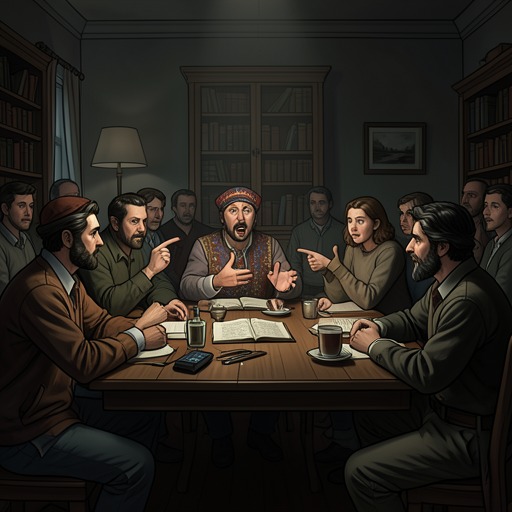
The company returns to Astervale near the end of the story, making the town the last place where it can spread word of Aeron and leave a mark on history. The return is explicitly circular: Astervale is the place Aeron reached during his life, and it becomes the place where his surviving companions give his memory its final public form. The tavern is filled with the aroma of sweat and ale, while Cadoc, Neith, and Jaromir sit at the center table and watch Sylvaine with reassuring expressions. Their presence confirms that the performance is a collective act of loyalty, even though Sylvaine is the one who must give it voice.
The season has changed since the first visit. First Fruits Day and summer have passed; burgundy fabric now hangs above the bar, and small pumpkins and bumpy gourds announce the approaching Harvest Day. The altered decorations make time visible within the same location. Astervale is recognizable yet transformed, and the seasonal shift mirrors the company’s own passage from anticipation and recovery to loss and commemoration. The warm fires, flowing drinks, and generous camaraderie prevent the scene from becoming only a funeral. The tavern welcomes a new season even as the company says goodbye to a dead companion.
Sylvaine performs the ballad of the last dragon and the ballad of Sir Aeron, a tune she has repeated in taverns, inns, and beside the company’s campfires. By the time the performance ends with the promise of meeting again, the crowd is visibly moved: some listeners cry, while others sing along with familiar portions. The performance confirms the goal begun during Aeron’s recovery. Astervale has become the place where personal memory becomes communal knowledge, and where Aeron’s life is preserved through a story rather than through his physical return.
Narrative Significance
Astervale’s recurring role follows the expedition’s central movement from survival toward meaning. At first, the town promises food when the company is nearly out of bread. Then it offers medical expertise when Aeron’s life is threatened. During the enforced delay, it provides Sylvaine with the time and audience needed to shape a heroic narrative. On the final return, the same location receives that narrative as a completed ballad and turns it into shared remembrance.
The town consequently joins the practical and symbolic dimensions of the quest. It is a place of apothecary shelves, medicinal herbs, weaponsmithing, tavern meals, and rested horses, but it is also the first and last threshold of Aeron’s public legend. The expedition does not defeat death by bringing Aeron back; instead, it carries him through words, melodies, and repeated performance. Astervale is where that method becomes clearest: the journey begins again on its roads after recovery, and the story begins anew in its tavern when the living finish singing.